In today’s eco-conscious marketplace, custom packaging boxes crafted from recycled materials are more than a packaging choice—they’re a powerful statement of sustainability, innovation, and brand integrity. As consumers increasingly demand environmentally responsible products and regulatory pressures rise, brands that proactively adopt recycled packaging are gaining a competitive edge. This article explores how custom packaging boxes made using recycled content bolster your brand’s sustainability, drive consumer loyalty, and unlock market opportunities—backed by industry data and real-world examples.
1. Rising Demand for Sustainable Packaging
Consumer Behavior & Purchasing Power
- A recent survey found that 54% of U.S. consumers knowingly chose products with sustainable packaging in the past six months, while 90% said they’re more likely to buy from brands using eco-friendly packaging.
- Younger generations—59% of Millennials and 56% of Gen Z—are especially proactive in selecting products based on sustainable packaging.
- Additionally, 43% of all consumers are willing to pay more for products featuring sustainable packaging, and 39% have switched brands due to eco-friendly packaging offers.
Global Market Momentum
- The sustainable packaging market is projected to expand from USD 272.93 billion in 2023 to USD 448.53 billion by 2030, reflecting a robust CAGR of 7.6%.
- Specifically, the recycled materials packaging sector is forecasted to grow from USD 189.92 billion to USD 245.56 billion by 2029 (CAGR ~5.27%).
- Meanwhile, the recycled packaging market—focused tightly on recycled-content materials—is valued at USD 48.69 billion in 2024, and expected to reach USD 77.16 billion by 2032 (CAGR ~6.01%).
Takeaway: Demand for recycled custom packaging boxes is surging, supported by both market growth and consumer willingness to invest in sustainability.
2. Environmental and Operational Advantages
Tapping into the Circular Economy
- Closed-loop box reuse systems allow fiberboard boxes to be reused multiple times before recycling, saving about 390 kWh of energy, 46 gallons of oil, and 700 gallons of water per ton of boxes reused.
- This not only reduces waste but also lowers dependency on virgin materials, minimizing carbon footprint and resource consumption.
Recycling Efficiency & Material Impact
- Corrugated boxes—the backbone of custom packaging—have an impressive 96.5% recycling rate, and paperboard packaging enjoys an 80.9% recycling rate overall.
- Using recycled paperboard also significantly lowers greenhouse gas emissions compared to virgin materials, aligning with circular supply chain goals.
Takeaway: Custom packaging boxes made from recycled materials provide meaningful environmental benefits—saving energy, water, and reducing landfill impact—while reinforcing circular economy principles.
3. Brand Value: Perception, Loyalty & Differentiation
Buyer Trust & Brand Quality
- Sustainable packaging improves brand reputation—investors, consumers, and stakeholders often view eco-friendly companies as lower risk and more aligned with long-term values.
- Research shows that green marketing strategies significantly enhance perceived brand quality and drive favorable consumer perception.
Industry Leadership & Innovation
- Companies across sectors are visibly shifting to recycled packaging. For example:
- Pai Skincare (beauty) reduced virgin plastic by 35%, transitioning to glass, bioplastics, and post-consumer recycled plastics.
- WestRock, a global packaging leader, embedded smart technology—like QR-enabled pizza boxes that guide consumers to local recycling info—into their fiber-based packaging offerings.
Takeaway: By adopting recycled custom packaging boxes, brands demonstrate environmental leadership, enhance trust, and differentiate themselves in crowded markets.
4. Actionable Strategy: Implementing Recycled Custom Packaging Boxes
Material Selection & Design Considerations
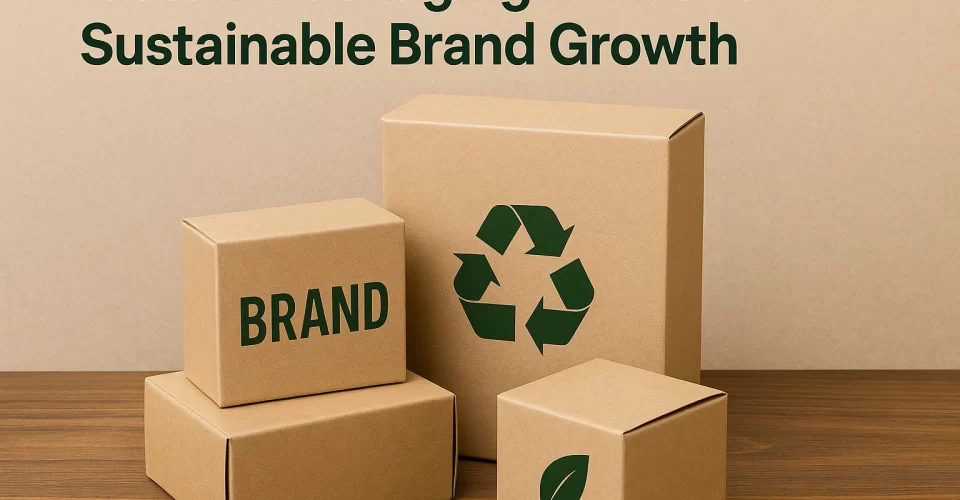
- Opt for high recycled-content paperboard or corrugated board that aligns with custom packaging needs (e.g. structural integrity, print quality).
- Use minimalist designs and clear eco-labels (e.g., “Made from 100% Recycled Paperboard”) to convey sustainability strongly and clearly.
- Explore closed-loop systems in supply chain operations to facilitate box reuse and reduce supply chain costs.
Market Positioning & Communication
| Consumer Segment | Messaging Strategy |
| Value-conscious buyers | Emphasize affordability, recyclability, transparency |
| Premium/eco-conscious buyers | Highlight high recycled content, environmental impact, smart features like QR codes |
Real-World Application: MindfulOfficial.com
- Showcase product lines with recycled custom packaging prominently on the site: e.g., “100% recycled mailer boxes.”
- Share sustainability stats and stories—e.g., energy saved, CO₂ avoided campaign—through blog posts, packaging page content, and social channels.
- Feature case studies or user-generated content: unboxing experiences, sustainability impact stories, or partner features that reinforce eco-credentials.
Conclusion
Integrating custom packaging boxes made from recycled materials is not just an eco-conscious decision—it’s a strategic imperative for brands in 2025 and beyond. This approach delivers:
- Proven consumer appeal and willingness to support sustainable brands
- Tangible environmental benefits through circular design
- Enhanced brand reputation and loyalty
- Differentiation through innovation and transparency