Sustainable packaging is becoming a key business decision for Indian brands. As consumers grow more conscious and regulations evolve, brands are actively choosing packaging that reduces environmental impact without compromising performance.
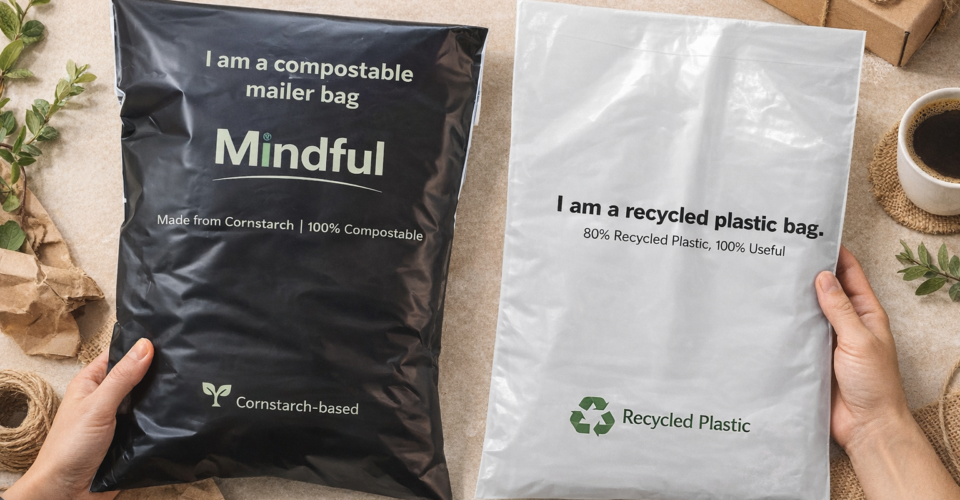
Two popular options dominate this space: compostable packaging and recyclable packaging. While both are sustainable, they serve different purposes.
What Is Compostable Packaging?
Compostable packaging is designed to break down into natural elements under composting conditions.
Common uses in India:
D2C and e-commerce mailers
Garment and inner packaging
FMCG and lifestyle products
It works best for short product life cycles and shipping-focused packaging, when paired with proper disposal guidance.
What Is Recyclable Packaging?
Recyclable packaging is designed to be collected and reprocessed into new materials.
Common uses in India:
Corrugated shipping boxes
Rigid boxes for gifting and premium products
Paper-based secondary packaging
It supports durability, reuse, and the circular economy, making it ideal for long-term and premium packaging.
Compostable vs Recyclable: Which Is Right?
There is no single best option.
The right choice depends on:
Product lifecycle
Customer disposal behaviour
India’s waste management ecosystem
Sustainability is about choosing the right material for the right use-case.
Use-Case Snapshot (India-Focused)
Table
Can Brands Use Both?
Yes. Many Indian brands use:
Compostable packaging for shipping
Recyclable packaging for premium presentation
This balanced approach delivers impact while maintaining brand experience.
Final Thought
Compostable and recyclable packaging are not competitors—they are complementary solutions. The most sustainable choice is the one that aligns with your product, customer behaviour, and disposal reality in India.
At Mindful, we help brands choose packaging that works in the real world—not just on paper.