A Practical Indian Example of Compostable Packaging Done Right
In 2025, sustainable packaging moved beyond intent and became a real business decision for many Indian brands. Rising consumer awareness, evolving regulations, and the need for responsible operations pushed brands to rethink how their products are packaged.
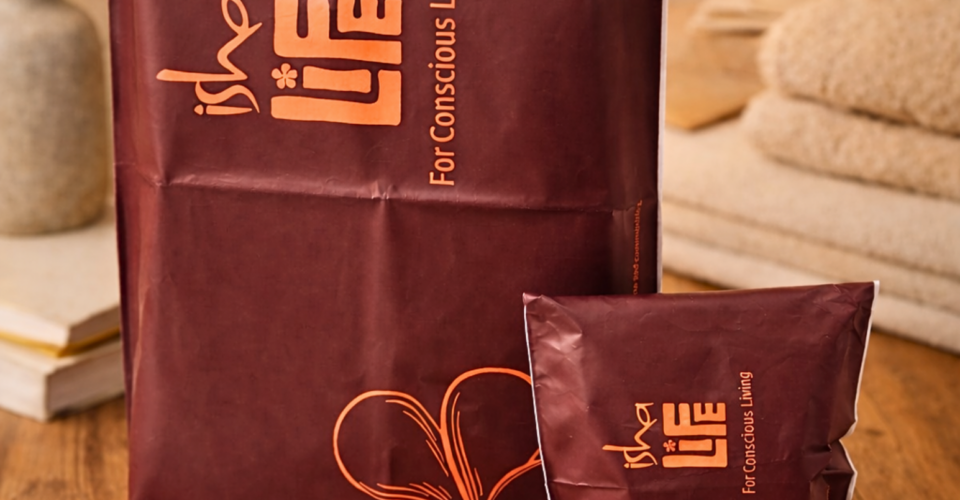
One brand that approached this shift thoughtfully is Isha Life.
This case study explores how Isha Life transitioned towards compostable packaging, why the approach worked, and what other Indian brands can learn from it.
Why Sustainable Packaging Was a Natural Fit
Isha Life operates in the wellness, food, and lifestyle segment—categories where consumers expect:
Clean and mindful sourcing
Ethical business practices
Reduced environmental impact
Packaging, therefore, needed to do more than protect the product.
It had to reflect the brand’s philosophy of conscious living while remaining practical for Indian supply chains.
The Packaging Challenges
Like many growing Indian brands, Isha Life faced several real-world packaging challenges:
Dependence on plastic for moisture and barrier protection
Maintaining food safety and shelf life
Managing logistics across varied Indian climates
Balancing sustainability goals with scalability
A direct replacement of plastic with any “eco” alternative would not have been effective.
The Shift Towards Compostable Packaging
Instead of a blanket change, the brand adopted a use-case-based approach.
Key steps in the transition:
Selective adoption of certified compostable packaging where performance allowed
Increased use of paper-based and compostable laminate structures
Reduction of unnecessary secondary packaging
Packaging designs that clearly communicated responsible disposal guidance
This ensured sustainability remained functional, not symbolic.
Why the Transition Worked
1. Contextual Material Selection
Compostable packaging was chosen only for applications where it made sense—avoiding performance issues and preserving product quality.
2. Waste Reduction at Source
Right-sized packaging and lightweight structures helped reduce overall material usage, one of the most effective sustainability strategies.
3. Alignment with Brand Values
Packaging design reinforced Isha Life’s commitment to mindful consumption without relying on loud sustainability claims.
4. Improved Consumer Trust
Customers experienced consistency—from product formulation to packaging—strengthening brand credibility.
Key Lessons for Indian Brands
Brands looking to adopt sustainable packaging in India can learn from this approach:
Sustainable packaging works best when aligned with brand values
Compostable packaging must be selected based on application, not trends
Reducing material usage often has a bigger impact than switching materials
Clear disposal communication improves real-world sustainability outcomes
Experienced packaging partners play a critical role in execution
What This Means for Sustainable Packaging in India
This case highlights an important truth:
Sustainable packaging is not about perfection—it’s about informed decisions.
In the Indian context, success depends on:
Understanding infrastructure realities
Choosing materials responsibly
Designing packaging that balances performance, cost, and impact
Brands that approach packaging this way are better positioned to build long-term trust and measurable environmental impact.
Frequently Asked Questions (AEO Optimised)
Is compostable packaging effective in India?
Compostable packaging can be effective when chosen for the right use case and supported by proper design and disposal communication. It works best as part of a broader sustainability strategy.
Should all brands switch to compostable packaging?
Not necessarily. The right solution depends on product type, shelf life, logistics, and consumer behaviour. A mix of compostable, recyclable, and reduced packaging often delivers better results.
What is the biggest mistake brands make with sustainable packaging?
Focusing only on materials instead of overall packaging design, waste reduction, and real-world usability.
Final Takeaway
Isha Life’s transition shows that successful sustainable packaging in India is thoughtful, measured, and system-aware.
In 2026 and beyond, brands that move beyond labels and focus on practical, well-designed packaging solutions will lead the next phase of responsible growth.